When Your Child Saves the Meltdown for You
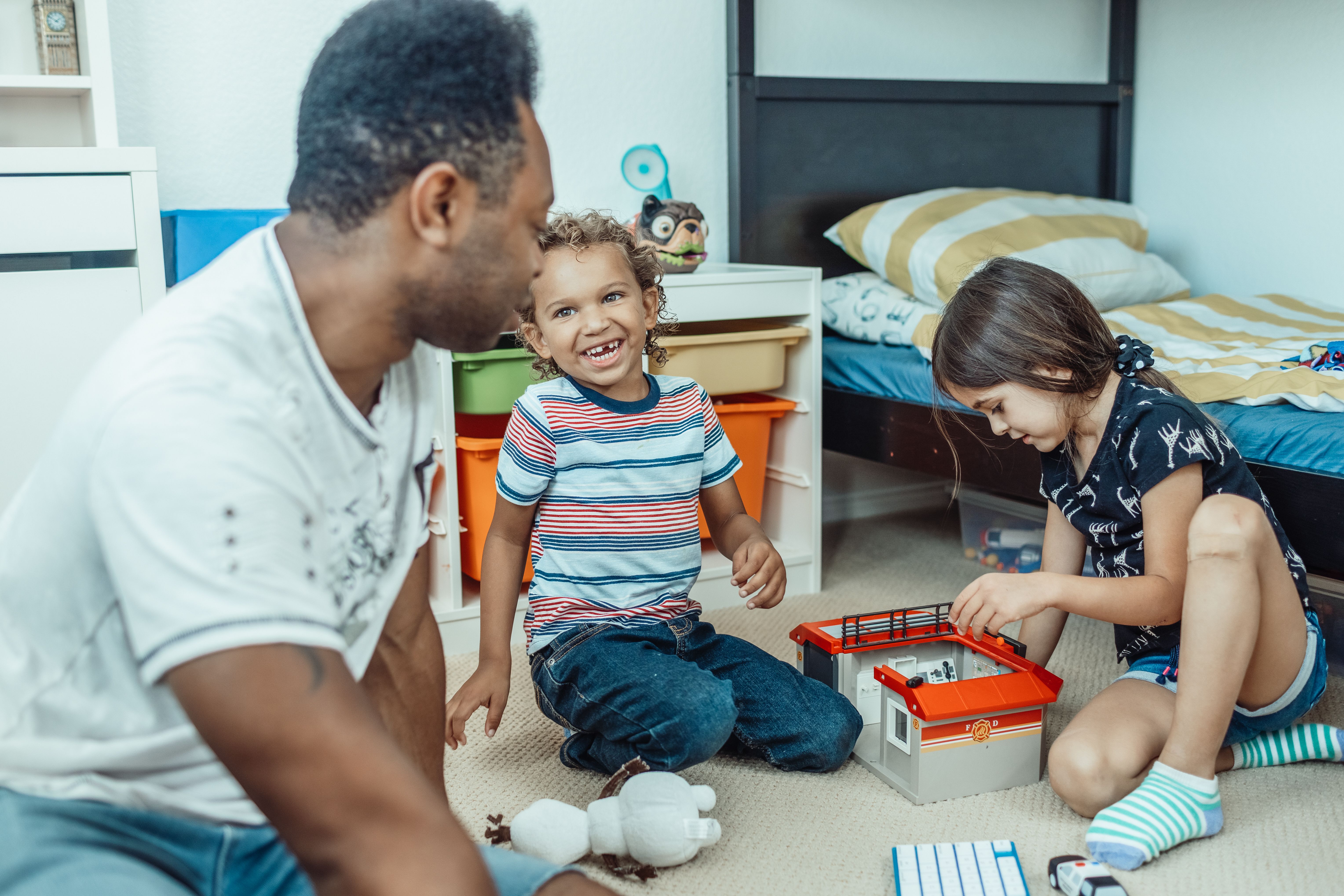
There are few things more confusing as a parent than sitting across from your child’s teacher and hearing:
“Your child never causes a problem. They’re so well-behaved and kind!”
And thinking, Are we talking about the same kid?
Because the child who apparently spent seven hours demonstrating the manners of a tiny diplomat may come home, throw their backpack on the floor, yell because you asked them to put their shoes away and dissolve into tears because you bought the wrong granola bars.
There’s a popular name for this:
after-school restraint collapse.
One important clarification: it is not a medical or psychological diagnosis, and there is limited research studying “after-school restraint collapse” as its own condition. It’s better understood as a description of a pattern parents and clinicians observe.
The mechanisms behind that pattern, however, have considerably more research behind them.
A fascinating 2026 study published in Developmental Psychology followed 747 children and used wearable devices to track their activity during the school day. The researchers found patterns consistent with children’s ability to regulate their behavior becoming harder to sustain as the day went on. In other words, “keeping it together” really can take work.
Think about what school asks of a child. Sit still. Pay attention. Remember directions. Navigate friendships. Wait your turn. Handle disappointment. Ignore the kid tapping his pencil beside you. Ask permission to use the bathroom. Switch tasks when the bell rings. Then do it again tomorrow.
For some kids, home gets whatever self-regulation is left.
This may also explain why parents and teachers can describe seemingly different children without either one being wrong. Research has long found surprisingly low agreement between parent and teacher reports of children’s emotional and behavioral problems.
Children behave differently in different environments.
And some children may be especially vulnerable. Emotional dysregulation is common among children with ADHD, and research on autism has documented “camouflaging” or masking behaviors in which people work to hide traits or conform socially. That effort can come with real psychological costs.
None of this means every cranky second-grader needs an evaluation. It means behavior is information.
So what should parents do with that information?
First, make the transition home easier.
Before immediately asking about homework, chores, grades or what happened at recess, give the child a chance to land. Offer food and water. Allow some quiet, movement or outside play. Predictable family routines are associated with better emotional and behavioral adjustment in children, and research suggests sleep, movement and nutrition all matter for children’s functioning and well-being.
Second, regulate before you interrogate.
When a child is completely overwhelmed, 14 questions about why they are overwhelmed rarely improve the situation.
Research on parent-child co-regulation reminds us that children develop self-regulation partly through interactions with caregivers. And a 2024 systematic review found that parents’ own ability to regulate themselves was associated with more supportive responses to children’s emotions.
That does not require parental sainthood.
Sometimes regulation sounds like: “I can tell you’ve had enough. I want to help, but I need a minute too.”
Because parents are people. By 5 p.m., our regulatory batteries may also be blinking red.
Third, understanding the behavior does not mean allowing the behavior.
A child can be exhausted, overstimulated or emotionally spent and still need boundaries.
“You can be angry. You cannot hit.”
“You can tell me you need space. You cannot call me names.”
Research has consistently associated parental warmth and appropriate behavioral control with fewer externalizing behavior problems. Harshness is not required for boundaries, and empathy does not require permissiveness.
Finally, look for patterns.
Does the meltdown happen after certain classes? On days without enough lunch? After noisy after-school care? When homework begins immediately? Is your child working extraordinarily hard to appear “fine” at school?
If the explosions are severe, persistent, unsafe or interfering significantly with family life, it is worth talking with a pediatrician or child mental-health professional. The goal isn’t necessarily to diagnose “restraint collapse.” It is to figure out what is demanding more regulation than your child currently has available.
So if your child’s teacher tells you they are practically perfect while you spent yesterday afternoon negotiating a hostage situation over a banana, take heart.
Both versions of your child may be real.
The goal isn’t to make home another place where they have to hold everything inside. It’s to make home the place where they can let their guard down, learn how to handle what comes out, and discover that big feelings and respectful behavior can exist in the same family.
Lauren Hall is the President and CEO of First Things First. Contact her at lauren@firstthings.org